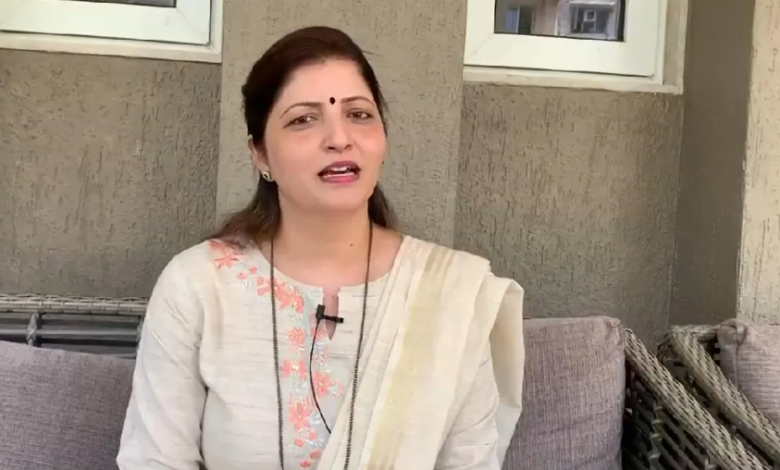
Rupali Chakankar is a Maharashtra-based political leader whose public career has included important roles in the Nationalist Congress Party (NCP) and the Maharashtra State Commission for Women. Her name has appeared frequently in Maharashtra’s political and social affairs, particularly around women’s rights, public hearings, grievance redressal, and party organisation.
She is also a figure whose career has attracted political criticism and controversy. That makes it important to separate established facts from allegations, political claims, and media reports.
This article looks at Rupali Chakankar’s political journey, her role in the Maharashtra State Commission for Women, the issues associated with her public work, and the major developments surrounding her resignation from public positions in 2026.
Who Is Rupali Chakankar?
Rupali Chakankar is an Indian politician from Maharashtra associated with the Nationalist Congress Party. She became particularly prominent through the party’s women’s wing and later through her appointment as chairperson of the Maharashtra State Commission for Women.
She was appointed to the women’s commission in October 2021. The commission’s own annual report for 2022–23 lists her as chairperson for that period.
Her public profile grew as she participated in programmes dealing with women’s safety, domestic violence, sexual harassment, legal awareness and access to government support. She also remained active in party politics, making her career somewhat different from that of a career bureaucrat or legal professional.
Quick facts
| Detail | Information |
|---|---|
| Name | Rupali Chakankar |
| State | Maharashtra |
| Political association | Nationalist Congress Party |
| Major public role | Former Chairperson, Maharashtra State Commission for Women |
| Commission appointment | October 2021 |
| Reappointment | October 2024 |
| Commission tenure | Ended in March 2026 |
| Political focus | Women’s organisation, public issues and women’s rights |
| Former party role | State president of the NCP women’s wing |
Some personal-profile websites publish additional information about her birth date and family, but those details are not as well documented in official government sources. For that reason, they should be treated cautiously rather than presented as independently verified facts.
Early Political Journey
Chakankar’s rise in Maharashtra politics was closely connected with grassroots political organisation and women’s participation in the NCP.
In 2019, she was appointed president of the Maharashtra unit of the NCP women’s wing after Chitra Wagh left the position. Contemporary reporting described Chakankar as having previously worked as the Pune city women’s president of the party.
The appointment gave her a statewide organisational role. A women’s wing is not simply a symbolic branch of a political party. It can play a practical role in mobilising members, organising public programmes, raising women-centred issues and building political networks at the local level.
For Chakankar, this role helped establish her as a recognisable NCP leader beyond Pune.
Her political work also brought her into debates over women’s safety, social policy and the treatment of women in public life. Over time, her visibility increased enough for her to be considered for larger political responsibilities.
Role in the Maharashtra State Commission for Women
One of the most important chapters of Chakankar’s career began in October 2021, when she became chairperson of the Maharashtra State Commission for Women.
The commission is a statutory body established under Maharashtra Act No. XV of 1993. According to the Maharashtra government’s Women and Child Development Department, its responsibilities include improving the status and dignity of women, examining practices that harm women, monitoring laws affecting women, advising the government and providing counselling and free legal advice to women who need assistance.
That means the chairperson’s position carries responsibilities beyond political campaigning.
The commission deals with issues that can be highly sensitive, including domestic violence, sexual harassment, discrimination, legal rights and complaints involving public authorities.
What does the commission actually do?
Its work can include:
- Receiving and examining complaints concerning women.
- Supporting women who need counselling or legal guidance.
- Conducting public hearings.
- Working with police and district administrations.
- Organising legal-literacy programmes.
- Studying issues affecting women.
- Advising the government on policies and implementation.
- Working with non-governmental organisations.
- Monitoring concerns involving women’s rights and related legislation.
The commission also conducts legal-literacy workshops and research programmes and publishes a quarterly newsletter called Think – a Spark in Marathi and English.
This broader institutional role is important when assessing Chakankar’s tenure. The position was not limited to making public statements; it involved coordination with government agencies, police, legal services and civil-society organisations.
Public Hearings and Women’s Grievances
One area associated with Chakankar’s tenure was the use of public hearings and outreach programmes to address women’s complaints.
In May 2025, during a “Commission for Women at Your Door” programme in Nashik, Chakankar called for women grievance redressal committees in government, semi-government and private establishments. The stated objective was to strengthen mechanisms for dealing with sexual-harassment complaints.
She also referred to the commission’s public hearings across Maharashtra and the involvement of district administrations, police and legal-services authorities in resolving complaints.
This type of coordination matters because many women’s complaints involve more than one institution. A woman experiencing harassment, for example, may need police assistance, legal advice, counselling and administrative intervention at different stages.
A commission can therefore serve as a bridge between the complainant and existing government mechanisms rather than replacing the police or courts.
Issues Raised During Her Tenure
Chakankar’s tenure was not free from criticism.
In 2024 and 2025, opposition leaders and political figures questioned the appointment and political background of the commission’s leadership. Some argued that the head of a women’s rights institution should be politically independent.
In June 2025, NCP (Sharad Pawar faction) leader Rohit Pawar argued that commissions dealing with women and children should ideally be headed by people such as former bureaucrats, judges or other non-political professionals. His comments reflected a wider debate over whether statutory commissions should be led by serving or closely affiliated political figures.
This criticism is different from alleging wrongdoing. It concerns institutional design and independence.
The question is straightforward: should an organisation responsible for examining complaints involving powerful individuals and political institutions be headed by someone with a strong political association?
Supporters of political appointments can argue that political leaders may have strong grassroots connections and understand public administration. Critics can argue that independence and public confidence are equally important.
That debate is relevant to understanding Chakankar’s public career.
Reappointment in 2024
Chakankar was reappointed as chairperson of the Maharashtra State Commission for Women in October 2024.
Her reappointment generated criticism from some members of her own political party as well as other political figures. She defended the decision and said her continuation was based on her qualifications and previous performance. Hindustan Times reported that she dismissed criticism surrounding the appointment.
The episode also demonstrated how closely her political career and institutional role had become connected.
Her name was simultaneously associated with the NCP women’s organisation and the state women’s commission. That dual visibility made her an influential political figure but also meant that decisions involving her could attract greater political scrutiny.
Work on Sexual Harassment and Women’s Safety
Sexual harassment was another major issue during Chakankar’s time at the commission.
In 2025, she publicly called for grievance-redressal committees across districts and establishments. The proposal reflected the broader principle that workplaces should have functioning mechanisms through which women can report harassment rather than being forced to navigate the system only after a serious escalation.
The Maharashtra State Commission for Women itself identifies legal awareness and monitoring the implementation of laws affecting women among its core responsibilities.
For readers trying to understand the commission’s role, an important distinction is worth remembering: the commission is not a substitute for the courts. It can receive complaints, provide support, coordinate with authorities and make recommendations, while criminal investigations and judicial decisions remain matters for the relevant legal institutions.
The 2026 Controversy and Resignation
The most significant development in Chakankar’s recent public career came in March 2026.
A controversy emerged over her alleged association with Ashok Kharat, a Nashik-based self-styled astrologer who had been arrested following allegations made by a woman. Political opponents raised questions about Chakankar’s association with him and called for her resignation from the women’s commission.
It is important to distinguish allegations from established findings. Reports about the controversy included claims made by political opponents, while Chakankar denied wrongdoing and said the allegations against her were baseless.
On March 20, 2026, reports said Chakankar resigned as chairperson of the Maharashtra State Commission for Women amid the controversy. Later, on March 28, she also resigned as president of the NCP women’s wing.
Her departure therefore ended two major public roles that had defined her political profile for several years.
Chakankar’s response
Chakankar did not accept the allegations against her as established facts.
In April 2026, she said that the accusations were fabricated and described the situation as an attempt to defame her and her family. She also called for an inquiry into the origins of an anonymous letter that she said had contributed to the controversy.
That response is an important part of the story because reporting on politically sensitive controversies should include the response of the person facing the allegations.
The resignation itself should therefore not automatically be interpreted as proof of misconduct. A resignation from public office can occur because of political pressure, institutional concerns, reputational damage or a desire to allow an investigation to proceed without further controversy.
Why Her Career Has Attracted Attention
There are several reasons Rupali Chakankar has remained a prominent name in Maharashtra politics.
1. A prominent women’s political role
Her leadership of the NCP women’s wing gave her a statewide political platform. Women’s wings can influence both party organisation and public discussion of issues affecting women.
2. A high-profile statutory position
The chairperson of the Maharashtra State Commission for Women occupies a public-facing position connected to women’s rights and grievance redressal.
3. Political and institutional overlap
Because Chakankar had a strong party background while leading a statutory commission, questions about institutional independence became part of public discussion.
4. Frequent involvement in sensitive cases
The commission deals with subjects such as domestic violence, harassment and women’s safety. Statements by its chairperson can therefore attract substantial media attention.
5. The events of 2026
Her resignation from both the women’s commission and the NCP women’s wing brought renewed attention to her career and political future.
Understanding the Maharashtra State Commission for Women
To understand Chakankar’s role properly, it helps to understand the institution itself.
The Maharashtra government describes the commission as a statutory organisation created under the 1993 Maharashtra State Commission for Women Act. Its responsibilities include protecting women’s dignity, examining practices that harm women, advising the government and providing counselling and free legal advice.
The commission also works with NGOs and conducts legal-literacy programmes.
Its practical value lies partly in accessibility. A person facing a problem may not always know which government department, police authority or legal mechanism to approach. A women’s commission can provide an additional institutional route for raising concerns.
At the same time, people should understand its limits. A commission does not replace a criminal court, police investigation or formal legal process.
Key Lessons From Her Public Career
Chakankar’s career illustrates several broader features of Indian state-level politics.
Political visibility can bring both influence and scrutiny
A leader who builds a strong public profile can raise issues more effectively and reach a larger audience. The same visibility also means that criticism receives greater attention.
Institutional independence matters
Women’s commissions deal with vulnerable complainants and sensitive allegations. Public trust is therefore particularly important. Whether a chairperson is politically affiliated or professionally independent can become a significant public-policy question.
Public claims should be checked carefully
Political controversies often generate competing versions of events. Readers should distinguish between:
- An allegation
- A political accusation
- A denial
- A police investigation
- An official finding
- A court judgment
These are not interchangeable.
Resignation does not equal conviction
A person may leave public office amid controversy without being legally found guilty of wrongdoing. Likewise, a resignation does not automatically disprove allegations.
This distinction is particularly important when discussing politicians and public officials online.
Common Mistakes When Researching Rupali Chakankar
People searching for information about Chakankar may encounter biographies, social-media posts, political commentary and news reports that do not always agree.
A careful reader should avoid several common mistakes.
Mistake 1: Treating every online biography as an official source.
Personal websites may contain useful background information, but government records and established news organisations are generally more reliable for official appointments and public positions.
Mistake 2: Presenting allegations as proven facts.
Claims made during political controversies should be clearly identified as allegations unless an authoritative investigation or court ruling establishes them.
Mistake 3: Confusing party positions with government positions.
The NCP women’s wing is a political organisation, while the Maharashtra State Commission for Women is a statutory body.
Mistake 4: Assuming the commission is a court.
It has important functions, but it does not replace the judiciary.
Mistake 5: Ignoring dates.
Chakankar’s positions changed over time. Describing her simply as the current women’s commission chairperson would be inaccurate after her March 2026 resignation.
What Is Known About Her Position Today?
As of 2026, Chakankar is a former chairperson of the Maharashtra State Commission for Women and a former president of the NCP women’s wing.
Her commission tenure ended in March 2026, and she subsequently stepped down from the NCP women’s wing leadership.
The distinction between her former positions and her current political status is important. Public figures can retain political influence even after leaving a formal post, but that does not mean they continue to hold the same office.
Readers should therefore check the date of any biography or news report before relying on it.
Frequently Asked Questions
Who is Rupali Chakankar?
Rupali Chakankar is a Maharashtra politician associated with the Nationalist Congress Party. She became widely known through her work with the NCP women’s wing and as chairperson of the Maharashtra State Commission for Women.
When did Rupali Chakankar become chairperson of the Maharashtra State Commission for Women?
She was appointed chairperson in October 2021. The commission’s 2022–23 annual report records her as chairperson during that period.
Was Rupali Chakankar reappointed?
Yes. She was reappointed as chairperson in October 2024. Her reappointment attracted political criticism, which she publicly defended.
What does the Maharashtra State Commission for Women do?
The commission works on women’s rights and welfare. Its responsibilities include examining practices harmful to women, monitoring implementation of relevant laws, advising the government, conducting legal-awareness programmes and providing counselling and free legal advice to women who need assistance.
Why did Rupali Chakankar resign from the women’s commission?
She resigned in March 2026 amid controversy surrounding her alleged association with Ashok Kharat. Chakankar denied wrongdoing and described the allegations as baseless.
Did she also leave the NCP women’s wing?
Yes. After resigning as women’s commission chairperson, she resigned as state president of the NCP women’s wing later in March 2026.
Is Rupali Chakankar still chairperson of the Maharashtra State Commission for Women?
No. She resigned from the position in March 2026. Reports published after her resignation refer to her as the former chairperson.
What is the main focus of her political career?
Her public career has focused strongly on women’s issues, political organisation and public advocacy. Her work has included women’s grievance redressal, legal awareness, sexual-harassment prevention and participation in NCP organisational activities.
Conclusion
Rupali Chakankar’s public career has moved through several distinct stages: grassroots political organisation, leadership of the NCP women’s wing, chairpersonship of the Maharashtra State Commission for Women, and, more recently, resignation from both major positions amid controversy.
Her career is worth examining not simply because of the controversies surrounding her, but because it highlights the complicated relationship between political leadership and statutory institutions dealing with women’s rights.
The clearest way to understand her record is to keep the timeline in view and separate documented appointments and public activities from political allegations or disputed claims. For readers following Maharashtra politics, that distinction provides a more balanced picture of both Chakankar and the institution she once led.